Review: The Fight, by Norman Mailer, 1975, 234pp.

In The Fight, Normal Mailer chronicles the first Muhammad Ali – George Foreman fight, which took place in Zaire (now Democratic Republic of the Congo) in 1974. The narrative reads as a novel, Mailer speaking of himself in the third person; he cleverly and charmingly justifies this choice of perspective early in the story. Mailer spends much time exploring the new Zaire in addition to having access, at times exclusive, to Muhammad Ali at his training camp, in the dressing room, after the fight. But the book is not just about the fight or Ali and Foreman, as Mailer takes readers through months leading up to the big event.

Besides the actual bout, a great portion of the narrative chronicles the complexity of the newly named Zaire and its leader Mobutu, who has wished to bring the fight to his people for purposes of publicity and politics. The complexity of the society in the Congo, the layers of languages and tribal affiliations, the baffling gestures of posturing by the dictator, provide a provocative and fascinating backdrop to the normal players: the boxers, the trainers, the entourages. Everyone, sportswriters included, are trapped in a way, sometimes literally, in this foreign place.

Vivid scenes include cameos of George Plimpton, Don King early in his career as a boxing promoter, a discontent Hunter Thompson, among others. Mailer’s keen observations create sharp depictions. His analysis provides more questions than answers about the cultural flux of the United States as well as Africa in the early 1970s—in terms of race, race relations, and identity. Mailer does well examining his own assumptions. Especially following Ali, a spokesman at this point in his career, it is impossible for Mailer to not consider all these different versions of “blackness” he encounters. The Fight is as much about culture as it is about boxing.

Mailer’s own internal struggles with the ideas of luck and courage—his seemingly random yet inescapable necessity to will himself to swing from his hotel balcony to another, risking a deadly fall—weave other threads through the story. Courage and luck are universal concepts, but they are also hot pulses of, inextricable from, boxing.

All that really needs to be said here is that I read this book in one sitting, minus getting up for snacks. I can’t recall the last time I flew through a book like that. The Fight is a compelling account of history that illustrates why Norman Mailer is considered one of the best writers of the twentieth century. Of all the boxing-related books I have read so far, and there have been many, this is the most enjoyable, the one I would recommend first.

Ernest Hemingway’s 1977 Nobel Prize Acceptance Speech

winwg's avatarWrite it Now!

“Ernest Miller Hemingway (July 21, 1899 – July 2, 1961) was an American author and journalist. His economical and understated style had a strong influence on 20th-century fiction, while his life of adventure and his public image influenced later generations. Hemingway produced most of his work between the mid-1920s and the mid-1950s, and won the  Nobel Prize in Literature in 1954. He published seven novels, six short story collections, and two non-fiction works. Three novels, four collections of short stories, and three non-fiction works were published posthumously. Many of his works are considered classics of American literature. ” For more, (Wikipedia) visit:  http://bit.ly/1auRATU

To hear Hemingway give his Nobel Prize acceptance speech, visit:  http://bit.ly/1dufWBN

Happy New Year!


View original post

Review: The Sweet Science by A.J. Liebling, 1956 (2004 edition), 267pp.

Originally published in 1956, Liebling’s The Sweet Science chronicles the bouts of top boxers from June 1951 to September 1955. The 2004 edition includes a forward by Robert Anasi. The book is organized into five main sections: The Big Fellows, The Melting Middleweight, The Big Fellows Again, Other Fronts, and Ahab and Nemesis. For example, The Big Fellows follows Joe Louis versus Lee Savold. The next section, The Melting Middleweight, begins with Sugar Ray Robinson and Randy Turpin.

Throughout the book, Liebling refers back to Pierce Egan, who coined the term “sweet science,” and his Boxiana from 1812: “Egan’s cockney characters, and his direct quotes of how they talked, were a gift to Dickens, who, like every boy in England, read the author of Boxiana.” Liebling quotes Eagan frequently enough to sate my current curiosity, saving me from hunting down the original 1812 Boxiana; or Sketches of Ancient and Modern Pugilism; from the days of Broughton and Slack to the Heroes of the Present Milling Era.

What makes the book interesting is not just the facts of history, but the lively, personal, conspiratorial voice. The reader follows Liebling scene by scene, down streets, in pubs, in cabs, in arenas and training camps, through discussions with trainers, fighters, observers. Each scene is dressed with real people and sensations of life: “Two seats at my left, which had been vacant all evening, were now occupied by a couple. The girl, a smashing blonde in a backless black evening dress, must have expected that she was going to sit out in ringside, where people could see her. A woman somewhere behind her said, but not to her, ‘I call that a vulgar way to dress.’ It seemed to cheer the blonde, but the man with her looked uncomfortable.” The prose here should be cherished not only for the historical chronicling of boxing, but for capturing the American cultural milieu of the early 1950s.

In addition to detailing a cultural landscape, Liebling infuses his prose with wit and humor: “There seemed to be some correlation between their eyesight and where they had placed their money.” A love of language and wordplay is clear: “One writer, reporting the victory, said Olson was a ‘burned-out hollow shell,’ which is like merging Pelion and Ossa, or Ford and General Motors, in the cliché business. He must have meant the shell of a broiled lobster after a shore dinner.” Tidbits such as the fact that Rocky Marciano’s last name is Marchegiano, Marciano “a contraction adopted for the convenience of fight announcers,” provide great nuggets of trivia. Some lines, like this description of Marciano, are just great lines: “He doesn’t verbalize his cockiness, but he has a kind of negative confidence, like a sleepy bulldog.”

The Awakening of Joyce’s Lust for Beauty

ArtLark's avatarA R T L▼R K

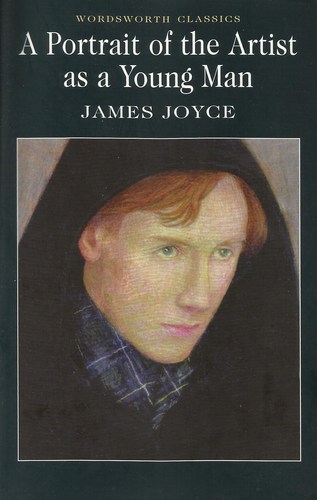
For those soul-searching, here is an excerpt from  A Portrait of the Artist as a Young Manthe first novel of Irish writer James Joyce (1882 – 1941). This autobiographical Künstlerroman is unprecedented in literature for its use of free indirect speech prefiguring Joyce’s stream of consciousness technique. American modernist poet Ezra Pound had the novel published in book format for the first time by B. W. Huebsch in New York, on the 29th of December 1916. The following passage captures one of the Joyce’s best-known epiphanies, his youthful infatuation with beauty – the seed of creativity:

A girl stood before him in midstream, alone and still, gazing out to sea. She seemed like one whom magic had changed into the likeness of a strange and beautiful seabird. Her long slender bare legs were delicate as a crane’s and pure save where an emerald trail of seaweed had fashioned…

View original post 350 more words

387 Short Stories: Day 20: Story 20: Foley’s Pond by Peter Orner

thehungryreader's avatarOf Books and Reading

9780544105508_p0_v1_s260x420 Title: Foley’s Pond
Author: Peter Orner
Taken from the Collection: The Best American Non Required Reading 2013

The story I read today was, “Foley’s Pond” by Peter Orner. The story first appeared in The Paris Review. I read it through my collection of, “The Best American Non Required Reading 2013”, edited by Dave Eggers. In this story, it is the pond, which is the protagonist. The story revolves around it.

The story starts with a child’s drowning in the pond. Barbara Zamost is two and a half years old and manages to slide under the fence of her house, which surrounds the pond, and drowns in it. Her older brother Nate blames himself for the drowning. The entire community is shattered by the incident and its children stop going to the pond. The pond is hazardous as well with a chemical plant right next to it. Ultimately, what happens to…

View original post 50 more words

Johnny Cash: The Life by Robert Hilburn (2013)

Jerry's avatarClassic Rock Review

9780316194754_custom-d61d20fe8fe383002eab0887dc0c0c3b42773dcf-s6-c30From amazon.com

“He is what the land and the country are all about, the heart and soul of it personified…”. Bob Dylan.

“It’s called country music and western music, but the truth is it’s American music. It speaks in story about America in a way that speaks to all of us, north, east, west, and south.” Richard Nixon at a White House concert.

With the holiday gift giving season fast approaching, there’s no surfeit of books on musical artists. Books on Charlie Parker, The Beatles, Duke Ellington, Robert Plant, Jimi Hendrix, and no doubt others will be on the bookshelves. But certainly one of the best is Robert Hilburn’s book on Johnny Cash.

Hilburn began this book in 2009 when Cash’s manager told him “only about twenty percent” of Cash’s life had been told. While previous books on Cash put his life and music in some kind of perspective, Hilburn…

View original post 881 more words

pyrajane’s review #33: Jim Henson: The Biography by Brian Jay Jones

JCoppercorn's avatarCannonball Read V

Jim HensonWhen I heard there was a massive biography of Jim Henson coming out, I was excited and worried.  I wanted to know more about the man who created so many things that I’ve enjoyed throughout my life, but I knew I was going to cry when they talked about his funeral.  I was also worried that he might turn out to be a jerk, even though I had no reason to worry about this.  But still, what if the guy who brought Kermit to life ended up being kind of a dick?  I don’t want that knowledge in my head.

Happily and not surprisingly, Jim Henson was lovely.

Brian Jay Jones spent several years with those close to Jim and the result is a wonderful book.  Reading it was pure pleasure because of Jones’ writing style.  It’s conversational, emotional, smart and incredibly informative and was extremely satisfying.  The combination of…

View original post 321 more words

“Another orange juice, with a little vodka in it this time” (Donald Barthelme)

Biblioklept's avatarBiblioklept

SNOW WHITE had another glass of healthy orange juice. “From now on I deny myself to them. These delights. I maintain an esthetic distance. No more do I trip girlishly to their bed in the night, or after lunch, or in the misty mid-morning. Not that I ever did. It was always my whim which governed those gregarious encounters summed up so well by Livy in the phrase, vae victis. I congratulate myself on that score at least. And no more will I chop their onions, boil their fettucini, or marinate their flank steak. No more will I trudge about the house pursuing stain. No more will I fold their lingerie in neat bundles and stuff it away in the highboy. I am not even going to speak to them, now, except through third parties, or if I have something special to announce — a new nuance of my mood…

View original post 170 more words

Blog at WordPress.com.

Up ↑

Design a site like this with WordPress.com
Get started