William T. Vollmann’s Europe Central | A Short Riff on a Long Book

Edwin Turner's avatarBiblioklept

Kilian Eng Kilian Eng

1. William T. Vollmann’s Europe Central,  811 pages in my Penguin trade paperback edition (including end notes), is a virtuoso attempt to describe or measure or assess or explain or analyze the Eastern front of WWII, a part of the war that in my American ignorance I know, or knew (no, know) so little about.

2. The book covers 1914-1975, most of the composer Dmitri Dmitriyevich Shostakovich’s life. If Europe Central has a hero, it is Shostakovich.

From the book’s last end note, “An Imaginary Love Triangle: Shostakovich, Karmen, Konstantinovaskya”:

When I think of Shostakovich, and when I listen to his music, I imagine a person consumed by fear and regret, a person who (like Kurt Gerstein) did what little he could to uphold the good—in this case, freedom of artistic creation, and the mitigation of other people’s emergencies. He became progressively more beaten down, and certainly experienced…

View original post 870 more words
Review: I Want to Show You More, by Jamie Quatro, Grove Press 2013, 206 pp.

Purchased / Reading With: The Starboard Sea by Amber Dermott, Summer Reading edition of Tin House

Type of Book: Loosely linked short stories / story cycle

My Research Interest: For entertainment

Structure: 15 stores of varying length, set around Lookout Mountain on the border of Georgia and Tennessee

Impression: I knew these stories would be “good” and “competent” short stories, because I trusted the recommendations. However, I was not prepared for the aching psychological depth of these stories. Quatro’s characters and narratives are not superficial, and anything but slight. This impression was solidified when the fourth story, “Here,” made me cry. I do not cry often when reading, yet this book made me tear up at least three times. Quatro demands the reader consider the mysteries, pains, and joys of parenting, marriage, illness, death, fear, and faith. The stories are intimate, visceral, and very much for today—but also timeless. The book is dark and light at once, challenging the reader to reconcile the two.

Readability: Everyone should read this book. This is one of those books that, if read with an open heart, will make the reader a better person.

Crossing Over (Into Comics)

Yash's avatarThe Book Wars

Last week I did a couple of reviews of verse novels that worked pretty well as crossover (from YA to “adult”) fiction. This week I want to introduce two comics that suit the crossover theme, except this time when I say “crossover” I mean that I’m pretty sure these were marketed for older audiences but could have appreciative teen readers as well.

The first book, just like one of the books last week, was a gift from the lovely Megan Harrison. Daytripper by Fábio Moon and Gabriel Bá was published in a serialized issues in 2010, and since then has won an Eisner award, a Harvey, and an Eagle award. The story is about Brás de Oliva Domingos …

The miracle child of a world-famous Brazilian writer, Brás spends his days penning other people’s obituaries and his nights dreaming of becoming a successful author himself—writing the end of other people’s stories, while his own…

View original post 701 more words

The Circle by Dave Eggers

A Little Blog of Books's avatarA Little Blog of Books

The CircleAfter battling my way through ‘The Luminaries‘ by Eleanor Catton recently, I wanted to read something which was the absolute polar opposite of historical fiction and settled on ‘The Circle’ by Dave Eggers. It tells the story of Mae Holland, a twenty-something graduate who starts a new job at The Circle – a social media conglomerate the size and power of Google, Apple, Facebook, Amazon, Microsoft and every other major tech company combined. Although Mae is impressed by what she finds there, the wider implications of how the company is developing soon become apparent.

View original post 304 more words

Oscar Wilde in Prison

ArtLark's avatarA R T L▼R K

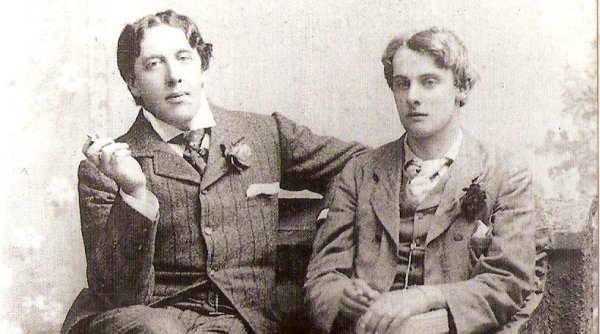
51chT0vHKVLOn the 19th of May 1897, Irish writer Oscar Wilde was released from prison after serving a two year  sentence for criminal sodomy and “gross indecency”. He had to go through hard labor and major deprivation, a very problematic situation for a hedonist accustomed to his creature comforts. His experiences in prison were the basis for his last work, The Ballad of Reading Gaol(1898).

In a bid to understand the reasoning behind Wilde’s imprisonment, Neil McKenna’sThe Secret Life of Oscar Wilde (2003) systematically investigated all available evidence about Wilde’s amorous liaisons, his lifelong erotic attraction to men and his subsequent support of Uranianism. The latter was a 19th-century term which referred to the actions of a person of a third sex, neither entirely male, nor female, someone with “a female psyche in a male body” who is sexually attracted to men, later extended as a definition…

View original post 639 more words

On Virginia Woolf and Mrs Dalloway

InterestingLiterature's avatarInteresting Literature

Virginia Woolf’s Mrs Dalloway was published on this day, 14 May, in 1925. In honour of this, we thought we’d offer a few little facts about this novel, and about Woolf herself.

The action of the book takes place over just one day – a ‘moment of June’ in 1923 – although there are flashbacks to events that occurred in the characters’ lives over the previous five years, in the immediate wake of WWI. The original title of the book was ‘The Hours’, a title that Michael Cunningham would go on to use for the title of his novel about Woolf, which weaves together events from Woolf’s own life and events from Mrs Dalloway. The book was filmed, in 2002, starring Meryl Streep and Nicole Kidman (the latter of whom famously wore a prosthetic nose to portray Woolf).

Woolf stampMrs Dalloway wasn’t the only novel Woolf wrote the action of…

View original post 332 more words

Create a free website or blog at WordPress.com.

Up ↑

Design a site like this with WordPress.com
Get started